
For Diane
On aging, being yourself, and the inimitable Diane Keaton

For the last five or six years, I’ve been engaging in what I call “Old Lady Movie Club” with a few girlfriends. The formation of this unofficial club started roughly around the time the first Book Club movie came out in 2018, which promised moviegoers of a “certain age” (+ enthusiastic gays) a boozy, over-the-top comedy starring some of Hollywood’s best loved but incomprehensibly under-employed actresses over the age of 60, including Jane Fonda, Mary Steenburgen, Candice Bergen, and yes, Diane Keaton. The film did so well at the box office, it became a franchise, spinning off another equally boozy, silly, vaseline-on-the-lens heavy sequel.
Diane’s first foray into the world of “Old Lady Movies”—which I broadly define as films centered on and catered to women over 50 that focus heavily on mortality and drinking wine—was actually a year before in a 2017 English film called, Hampstead, starring Brendan Gleeson. It is a film whose heart is in the right place, but yet again does not quite live up to the talents of its cast. She followed up the first Book Club movie with a film called, Poms, which is about a group of women from a retirement community who start a cheerleading squad. My friend, Carrie, and I gathered at my apartment in December that year and giggled our way through the movie—and Diane’s insistence on wearing her signature look even within the confines of a cheerleading uniform—while making Christmas ornaments.
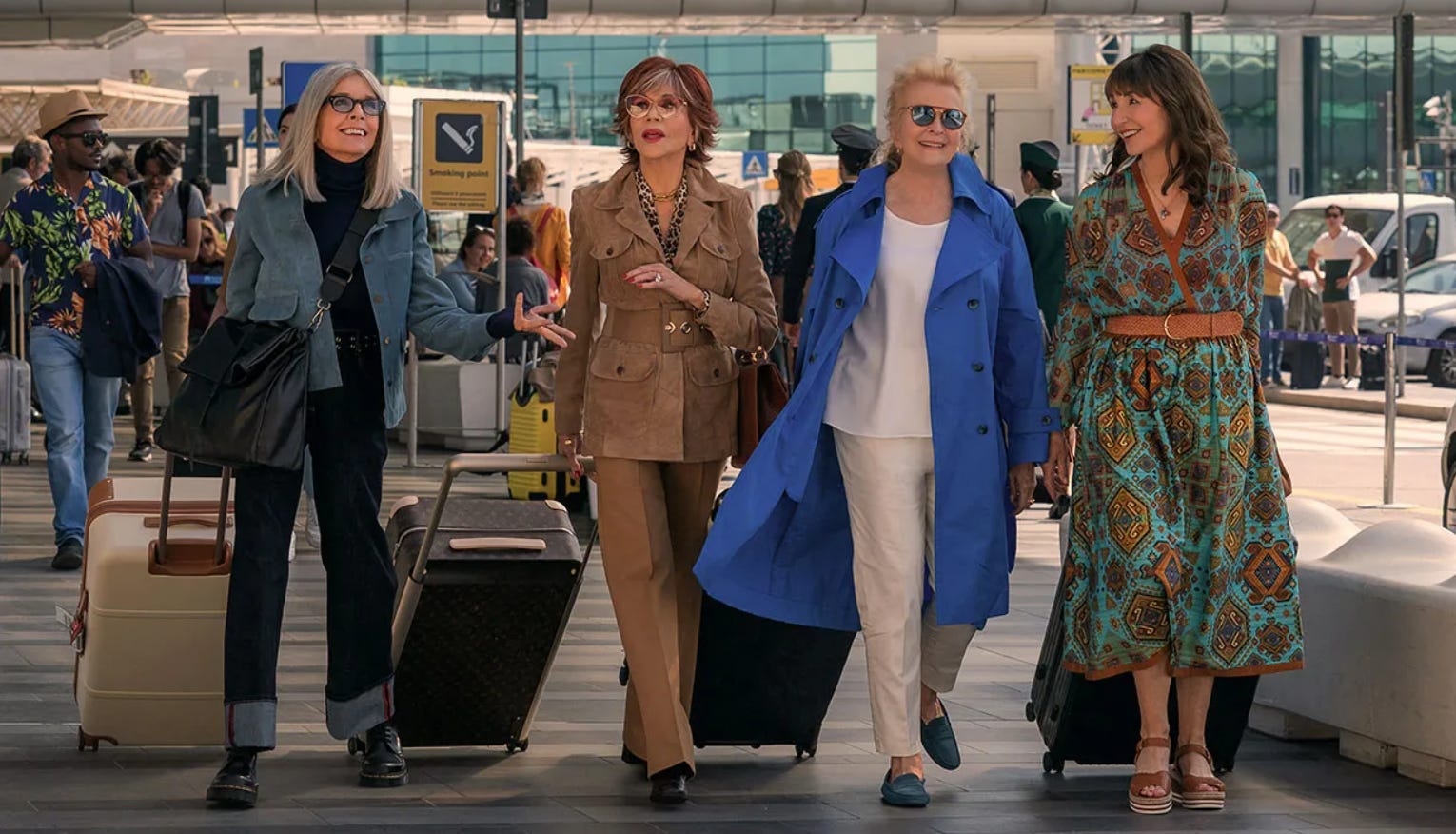
The movie also kind of made us sad. Why was one of our greatest actresses being relegated to B-movie fare while her male peers/occasional lovers—Pacino, De Niro, Beatty, etc—still got to make serious Oscar-bait dramas with serious filmmakers in between their own paycheck movies? I agreed with Anjelica Huston, who trashed the film in an interview with Vulture, saying:
“I’m looking for movies that impress me in some way, that aren’t apologetically humble or humiliating like, ‘Band of cheerleaders gets back together for one last hurrah,’ you know. An old-lady cheerleader movie. I don’t like that kind of thing. If I’m going to be an old lady—and I’m sort of touching old lady these days—at least I want to be a special old lady. I don’t want to be relegated to some has-been making a comeback.”
Anjelica was right. She deserves better. So did Diane. So do all women over the age of 50 in Hollywood who keep being told their careers have a shelf-life.
I saw this already happening in my own artistic life once I hit my thirties and was looking through play scripts for material for acting class and auditions. At age 34, I had to put on old age makeup to play the mother of a 29 year-old actress in a play Off-Off Broadway. I thought, well, a job is a job, but I wasn’t all that happy about it nor the quality of the material itself. Nuanced, complex material for women who don’t slot neatly into the ingenue stereotype and/or age bracket is few and far between. I thought about Diane, so iconoclastic yet so adept at slipping into the skin of any role, and I wondered if it’s even possible anymore to be so unique in an industry and world so hell-bent on sameness (and with AI everywhere, it’s just getting worse).
What makes me sadder and madder about Diane’s later career is that she was one of the key women responsible for changing the cultural perception of women over the age of 40. When First Wives Club arrived in the mid-90s and became a sleeper hit, it signaled a reclamation of older womanhood and Hollywood, including for its three leads: Diane, Bette Midler, and Goldie Hawn. The clip of the trio singing and dancing to Lesley Gore’s hit “You Don’t Own Me” from the film’s finale has been posted on social media more than any other clip from one of Diane’s movies since her passing, perhaps speaking to the film’s potent messaging about female resilience as well as its stellar, utterly lovable cast.
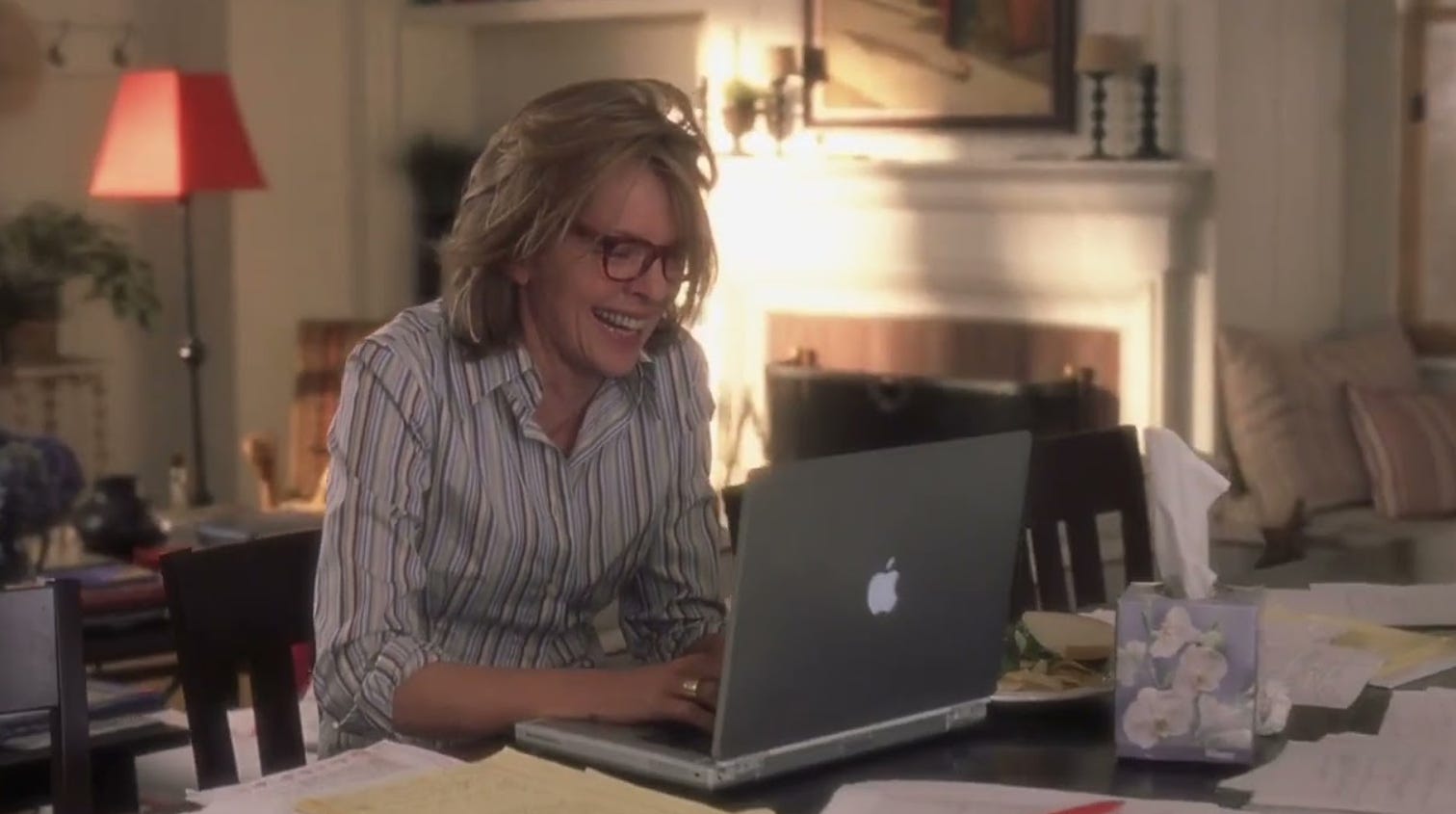
When Nancy Meyers re-teamed with Diane for her 2003 rom-com masterpiece, Something’s Gotta Give, much of the early press hype for the film was centered around a scene where the actress—then in her late 50s—does full-frontal nudity, startling Jack Nicholson’s playboy character who only has dated women significantly younger than him. Diane, free of her signature turtleneck, screams in that idiosyncratic way of hers before running offscreen. Jack’s character stumbles backwards and yells, “Oh GOD am I sorry!!!” It’s such a perfectly acted comedic moment that also tells us everything about how both men and the world at large view older women past their so-called “prime”: as scary, sexless beings.
Of course women don’t shrivel up and die after the age of 30 (despite what many teens and twentysomethings online these days seem to think), but there’s not a lot of media out there by, for, and about women past middle-age that reflects a more nuanced view of their lives and still very human concerns. It’s strange given how much progress has been made since I was born in 1988, smack in the middle of Golden Girls seven-season run on primetime, which was among the first shows to depict older women as glamorous, sexual, and complicated human beings who are also really, really funny. The series premiered at number 1 in the ratings in 1985 with 44 million viewers, a staggering number in any era. Susan Harris, the show’s creator, knew it would be a hit because “it was a demographic that had never been addressed.” Arriving just a year after Murder She Wrote premiered featuring Angela Lansbury’s also glamorous, older murder mystery writer turned sleuth Jessica Fletcher, both series won multiple Emmy Awards and were huge cultural hits. Both are also still airing all over cable in syndication.
Part of what makes Golden Girls and Murder She Wrote still so good to watch is also what makes Nancy Meyers’ flicks with Diane Keaton also so enjoyable: they’re aspirational. It’s not just that the writing and acting are great, but all of these present being an aging woman as something desirable. They have great clothes, close friends, lots of romance (and also sex!), beautiful homes, activities to keep them busy and give them purpose. These women are successful professionally and radiate a confidence and wisdom that only comes from accruing life experiences past age twenty. They’re treated with respect and their wisdom is valued. In this case, Meyers and Harris and the creators of Murder She Wrote are absolutely saying depiction DOES equal endorsement; that older women are fabulous and valuable humans worthy of our respect, admiration, and also space on our stages, televisions, and movie screens.
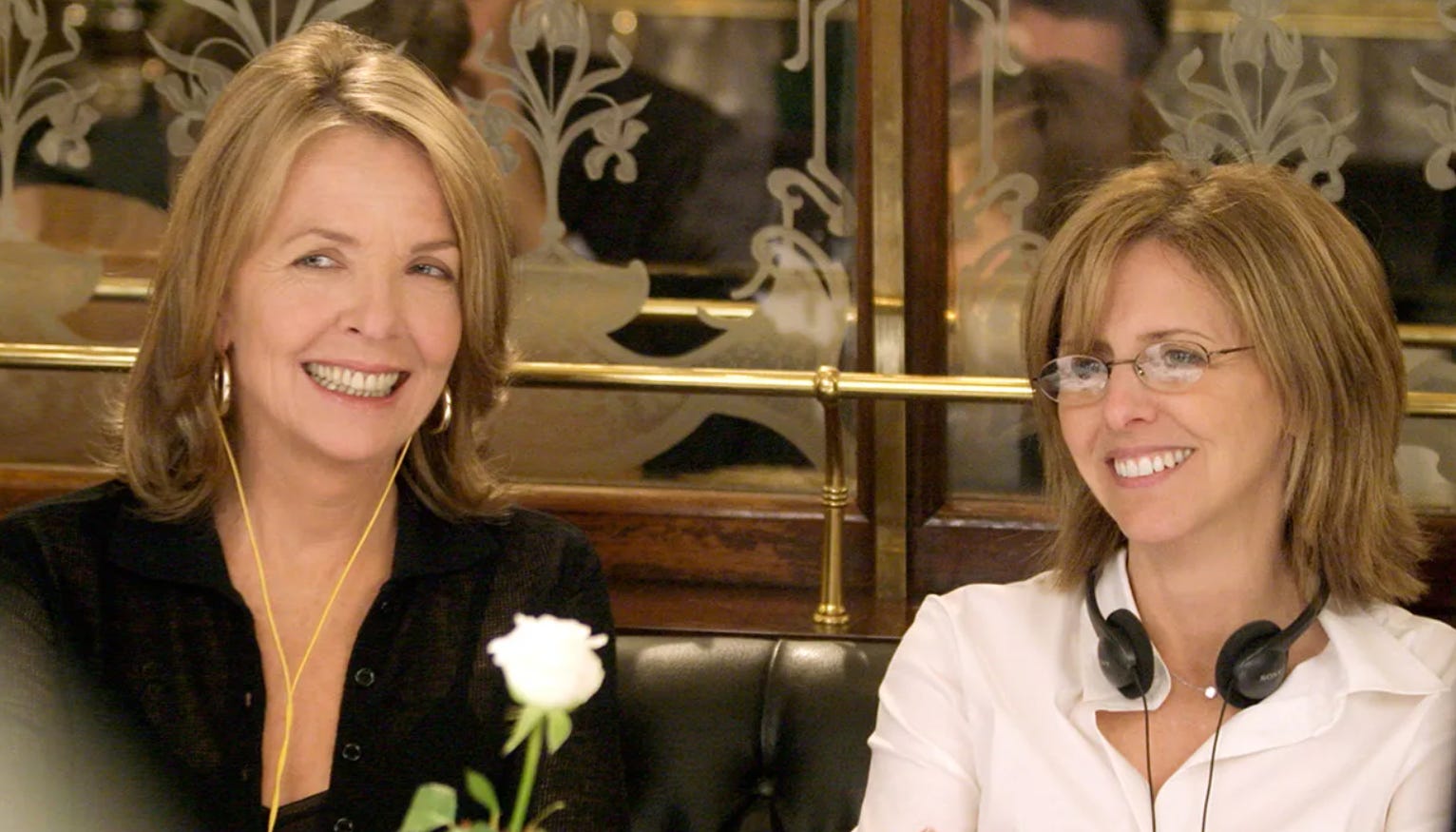
And this is why Diane Keaton’s last films bug so much, because I can see what these films are striving for yet never achieve. They offer space for older women while still depicting them as silly rather than serious. There’s not much other space being offered to those actresses, though historically, TV has always been the final stop for women over 40. Just look at Bette Davis, Barbara Stanwyck, and all the greats from Hollywood’s Golden Era who wound up doing guest spots on the Love Boat or in melodramatic TV movies. Diane Keaton’s last live-action TV role (her last TV credit is voicing a character on an adaptation of Green Eggs and Ham) was in the buzzy 2016 HBO limited series, the Young Pope, where she played Sister Mary, the close confidante of Jude Law’s controversial Pope Pius XIII. Keaton seemed to relish the dramatic material, turning in a soulful and emotionally complex performance. It also had some of her characteristic kooky charm, fitting in nicely with the series’ surreal tone.
When I heard Diane had passed away, it literally stopped me in my tracks. I started to cry, not just because she was one of my favorite actresses of all time but because I realized I had been holding on to hope that she’d get at least one more really good role and that maybe I’d be the one to write it for her. I suddenly realized that she had been a huge influence on my decision to pursue an MFA in playwriting & screenwriting, and that she’d always somehow been the person I’d been writing to and for throughout my program. I’d never met her (my dad did once on the backlot at Warner Bros in the late 70s and chatted with her for about ten minutes without even realizing it was her until after she’d left), but she just felt like such a presence in my creative life for such a long time that it felt like I knew her.
I have one more semester left of my MFA, and I’ll have to write the forward to my thesis, talking about what I’ve learned in my creative journey so far and what kind of artist I am and want to be. I’ll think again about Diane Keaton, who forged a path of her own in an industry that prizes youthful conformity but was ultimately failed by that industry toward the end. How watching her, Jane Fonda, Jessica Lange, Glenn Close, Sigourney Weaver—all these actresses I’d idolized and loved who made me excited about growing older—be shunted into roles that felt beneath their talents in movies that were easily forgotten once they were past 60 made me so sad and angry I felt I had to do something about it. I’m sure I’ll think about how I turned 37 this week and already weirdly feel the walls closing in on me in some ways despite the fact I’m still considered “young” by many standard metrics (just not as “young” as the teens and twentysomethings who fear-monger about “being old” online every other day). Women only become more interesting as they age, which is something Diane knew and so beautifully represented (her instagram was a treasure!), no matter the roles she got.
And while I am getting the MFA for me, I would be lying if I said I didn’t also do it—in some ways big and small—for Diane.
Thanks so much for reading. If you enjoyed this, please consider a paid subscription as even labors of love still involve labor. xoxo

Diane was absolutely robbed of an even greater career, but even so, I'm so grateful for her roles that are full of warmth and hope. She inspires me every day. Diane made me want to become more myself, is there anything more beautiful you can say about anyone?